Currently Empty: ₹ 0.00
Diamond Color Variation
- Home
- Diamond Color Variation
The Importance of Diamond Color
Diamond color plays a significant role in the overall beauty and value of the stone. While truly colorless diamonds are rare and highly prized, most diamonds display slight hints of color, typically yellow or brown. Even subtle differences in color can influence the diamond’s brilliance and price. Choosing the right color grade depends on your setting style, metal type, and personal preference—making color an essential factor in selecting the perfect diamond.
When most people picture a diamond, they envision a stone that appears crystal clear or colorless. However, when we refer to “diamond color,” we are actually describing the absence of color. Diamonds naturally occur in a wide spectrum of hues, ranging from completely colorless to subtle shades of yellow, gray, brown, and even a full array of vibrant colors. Evaluating diamond color is not based on personal taste; instead, it requires a precise and standardized process.
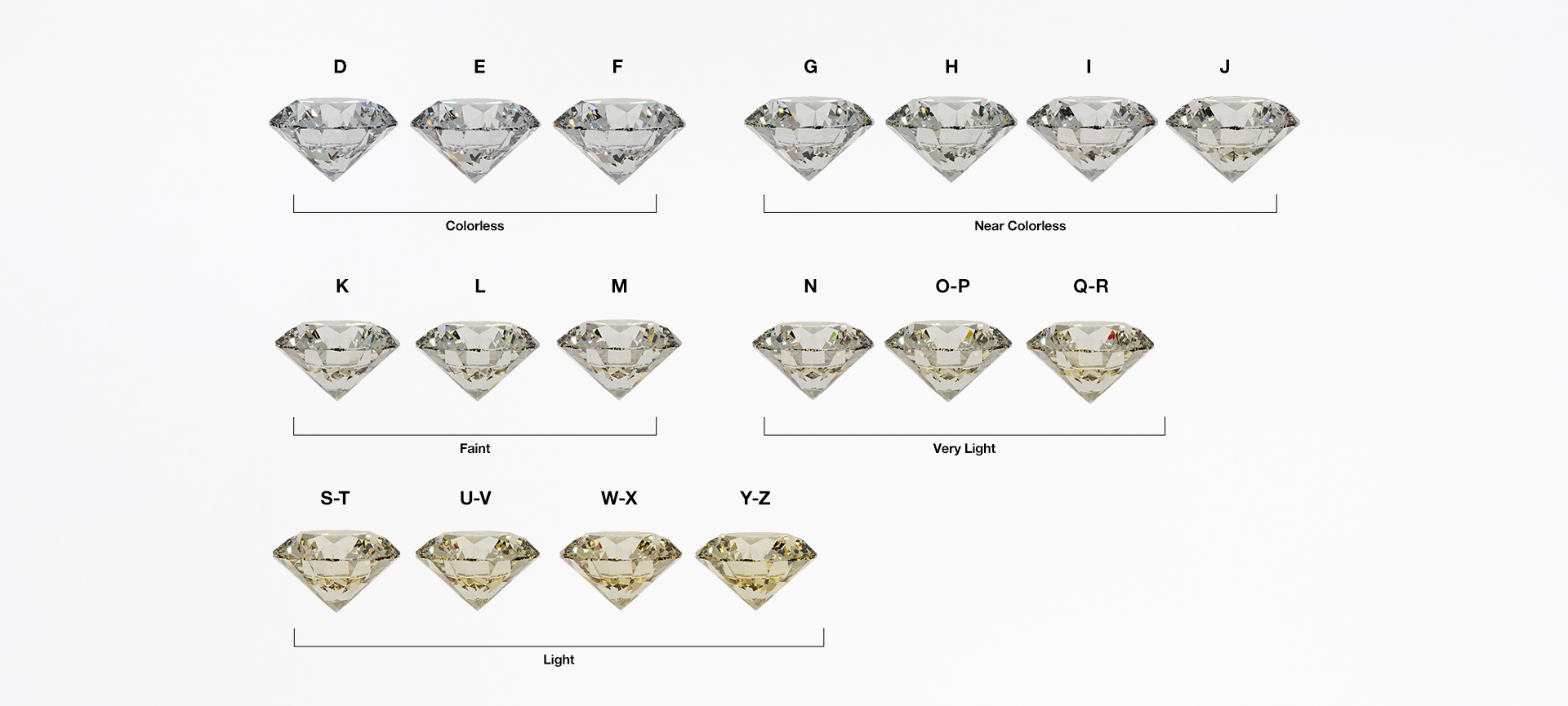
The proper assessment of diamond color is done under controlled lighting conditions, where diamonds are compared side-by-side with masterstones that have established color grades. Diamonds are then graded using the GIA D-to-Z Color Scale, where:
- D represents completely colorless
- Z indicates a light tint of color.
Choosing the right color grade is an important step in finding a diamond that meets your preferences for beauty, style, and value.
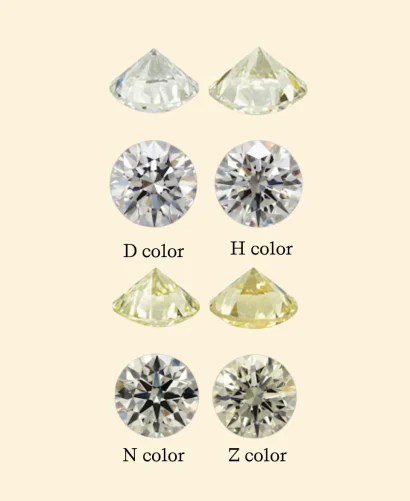
The GIA D-to-Z Color Scale
Before the introduction of a universal grading system, diamond color descriptions varied widely—ranging from letters and numbers to Roman numerals and vague terms like “blue white.” This lack of consistency often caused confusion and even misrepresentation of a diamond’s actual color.
To bring clarity and trust to the industry, the Gemological Institute of America (GIA) developed the D-to-Z Color Scale, now recognized globally as the definitive standard for grading diamond color.
- D denotes a completely colorless diamond—exceptionally rare and highly valued.
- Z represents a diamond with noticeable color, typically a light yellow or brown hue.
This scale has set the benchmark for transparency and consistency in evaluating the subtle nuances of diamond color, helping buyers make informed and confident decisions.
Advancing the Standard
The GIA D-to-Z Color Scale begins with the letter D to avoid any confusion or association with older, inconsistent grading systems. D represents the highest grade of colorlessness, signifying a diamond of exceptional rarity and quality. By introducing this clear and precise scale, GIA has established a universally recognized standard, bringing consistency and transparency to how diamond color is evaluated and discussed in the industry.
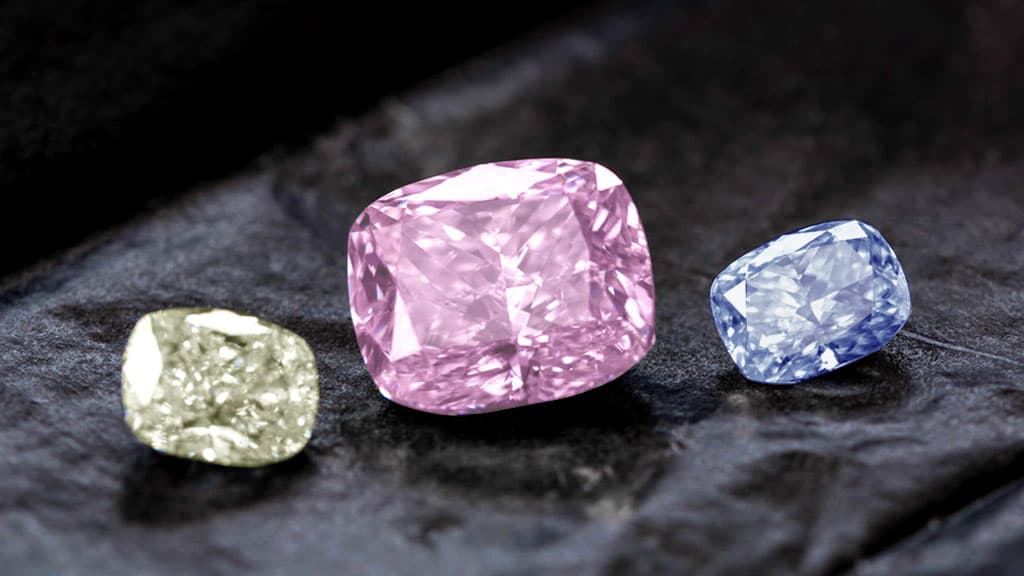
Understanding Fancy Color Diamonds
“Fancy color” refers to diamonds that fall outside the standard D-to-Z color grading scale. Although the term “Fancy” is not universally defined by a fixed set of guidelines, it is widely recognized within the gem and jewelry industry. It typically describes diamonds with more intense hues than those graded as Z, often encompassing yellow, brown, or even colors beyond the common yellow, gray, and brown, such as blue, pink, and green. These diamonds are valued for their rich and vibrant color, making them a unique and sought-after choice in the world of fine jewelry.